
Defending the World of 2050
Cyber Defenders
Train as a junior digital security analyst and ethical white-hat defender, hardening real systems against real threats.
- Ages 10–15
- 8-Week Modular Immersion
- 2–3 Sessions per Week
The Big Idea
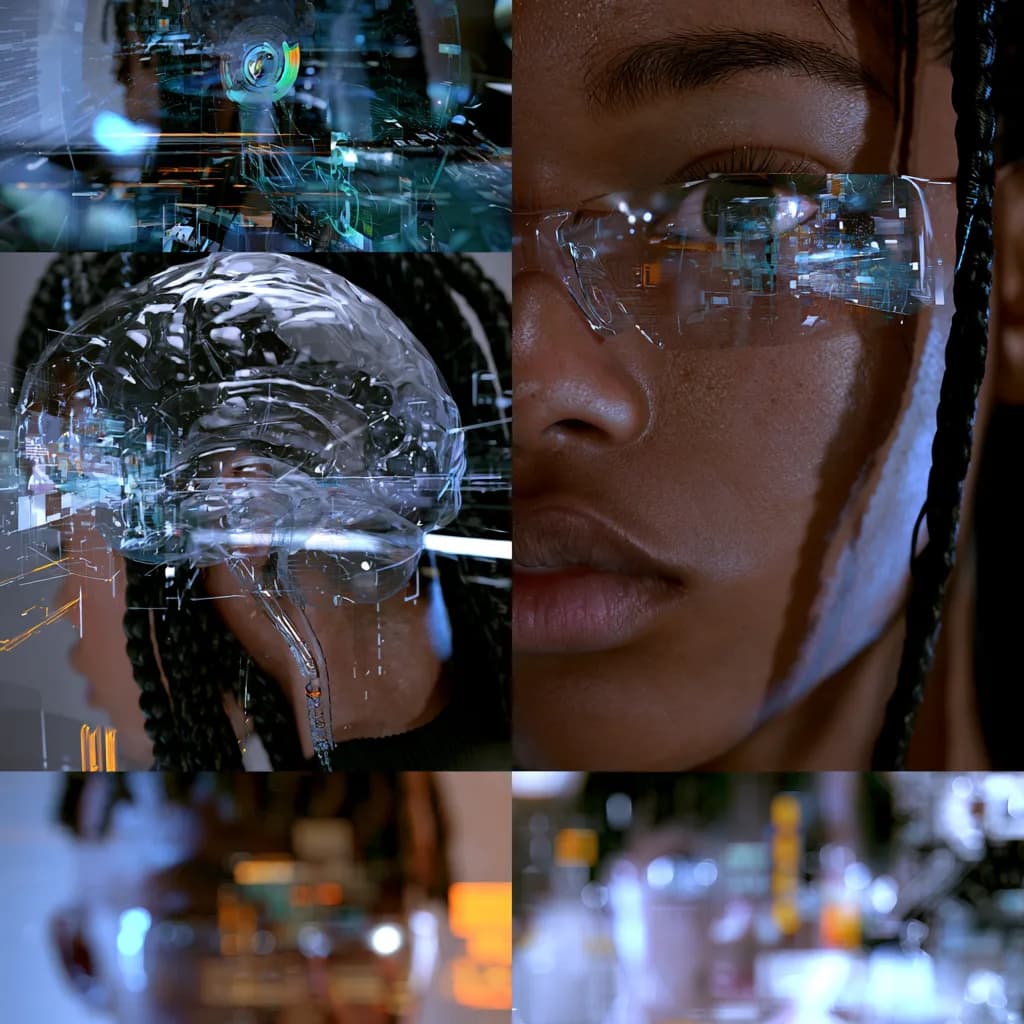
Cyber Defenders 2050 trains 10-to-15-year-olds as junior digital security analysts, systems architects, and ethical white-hat defenders who protect critical infrastructure and human dignity in a hyper-connected world. Built backward from a 2050 scenario where physical infrastructure and computational intelligence have merged, the course treats cybersecurity as the operational substrate that keeps civilization running, grounded in real economic, workforce, and pedagogical evidence rather than speculation.
What learners build
Across three tiers, every defender builds a real, hands-on security system inside an isolated sandbox — from a hardened home network and a working cryptographic tool suite, to a zero-trust access engine or an autonomous anomaly detector that flags port scans and isolates nodes.
The Showcase
The course closes with the Community Cyber Showcase: a live defense demo, an infrastructure pitch, or a full enterprise security audit depending on tier, earning the E+ Cyber Guardian Badge and a permanent deposit into the learner's Innovation Vault.
The 8-Week Roadmap
#1 The Digital Battlefield
- Explorer:
- Scavenger Hunt — map every connected device at home or in class and mark points of failure.
- Builder:
- Attack Vector Simulation — map attack paths across a fictional municipal transit network.
- Innovator:
- Threat Modeling Matrix — apply the STRIDE model to an autonomous hospital system.
Living Threat Map of global incident case studies
#2 Network Architecture & Telemetry
- Explorer:
- Packet Relay Game — physically pass packets across a classroom routing grid, computing checksums by hand.
- Builder:
- Wireshark Packet Detective — distinguish plaintext HTTP from encrypted HTTPS handshakes.
- Innovator:
- Subnetting & Port Audits — design segmented VLANs in a sandboxed simulator.
Network blueprint with annotated communication layers
#3 The Cryptographic Vault
- Explorer:
- Secret Code Workshop — encode and break Caesar, Pigpen, and Vigenère ciphers in CyberChef.
- Builder:
- Symmetric vs. Asymmetric — generate GPG key pairs and verify SHA-256 digests.
- Innovator:
- Post-Quantum Primer — build toy lattice encryption and QKD models.
Working cryptographic tool suite with documented key-exchange logic
#4 Build Sprint 1 — Hardening the Perimeter
- Explorer:
- Password Lab — run a brute-force simulation against weak passwords, then configure a password manager and MFA.
- Builder:
- Firewall Construction — write UFW/iptables rules in a sandboxed Linux VM.
- Innovator:
- Zero-Trust Access Engine — build role-based access control with multi-layer API authentication.
First operational defense prototype deployed in a sandboxed range
#5 Data, Biometrics & Social Engineering
- Explorer:
- Phishing Defense HQ — spot deepfakes, spear-phishing, and malicious redirects.
- Builder:
- Biometric & BCI Defense — audit simulated fingerprint and facial telemetry for spoofing.
- Innovator:
- AI Vulnerability Scanner — write a Python script that scans simulated ports and API endpoints.
Formal Security Audit Report evaluating attack surfaces
#6 Build Sprint 2 — Full System Construction
- Explorer:
- Smart Space Fortress — build an automated physical alarm plus a secure IoT dashboard.
- Builder:
- Defensive Honeygrid — deploy a sandboxed low-interaction honeypot that lures and logs probes.
- Innovator:
- Autonomous Counter-Agent — build an anomaly detector that flags port scans and isolates nodes.
Fully integrated automated security architecture prototype
#7 Ethics, Cyber Law & Red/Blue Drills
- Explorer:
- Digital Rights Tribunal — role-play privacy and surveillance ethics.
- Builder:
- Incident Response Sprint — run a 60-minute live triage: contain ransomware and restore backups.
- Innovator:
- Red vs. Blue Wargame — pen-testers and defenders audit and patch each other.
Incident Response Playbook plus stakeholder pitch
#8 Community Cyber Showcase
- Explorer:
- Live Defense Demo to parents, teachers, and peers.
- Builder:
- Infrastructure Defense Pitch for a smart community microgrid or school.
- Innovator:
- Enterprise Security Audit presented to working cyber professionals.
E+ Cyber Guardian Badge; project deposited into the Innovation Vault
Three Tiers, one Showcase
Explorer
Ages 10–11 · I Discover
A hands-on first contact with network basics, cryptography, and phishing defense through games, scavenger hunts, and physical simulations.
Builder
Ages 12–13 · I Analyze and Build
More technical independence: Wireshark packet analysis, firewall configuration in a sandboxed Linux VM, and a defensive honeypot build.
Innovator
Ages 14–15 · I Model, Test and Defend
The deepest track: threat modeling, zero-trust engineering, a Python-based AI vulnerability scanner, and a live red-vs-blue wargame.
How learning works
See It
Learners examine a real example of the problem or technology before touching it themselves.
Simulate It
A guided, low-stakes walkthrough lets learners try the idea out before they build for real.
Build It
Learners create something real: code, a prototype, a design, a plan.
Explain It
Learners put what they built into words, defending their choices and their reasoning.
Own It
What they built goes into their Innovation Vault: their own intellectual property, kept and carried forward.
The Innovation Vault
Every struggle triggers the Cyber Heritage Beacon — a three-part hint system pairing a technical scaffold with a Heritage Connection to real technologists of color, from Katherine Johnson to Dr. Timnit Gebru. Every prototype, policy, script, and audit is cryptographically timestamped into the learner's own Innovation Vault, building the same kind of portfolio a working cyber professional carries for life.
Safety, privacy & ethics
Every offensive technique is taught only after its defense, only inside an isolated sandbox with no route to production networks, and only after the student signs an age-appropriate Ethical Defender Pledge. Biometric labs use synthetic telemetry only, no student data trains AI models without separate parental opt-in, and every AI-generated hint passes human review before a child sees it.